
The best ways to celebrate Sinterklaas with older children, teenagers and adults
Celebrating Sinterklaas with older children, teenagers and adults: drawing names, making a “surprise”, writing a poem (with a chatbot too), and the full rules of the challenge game, the dice game, the auction game and the left-right story.
By Sonja ·
Drawing names
As the children get older, most families gradually switch to this: you draw names (lootjes trekken), and the children buy and make something too. Often the parents add a present of their own, so there’s still something from Sinterklaas himself on the table for the children.
A name you draw comes with a poem and/or a “surprise” — whatever suits your group. For some the poem is the highlight, for others the surprise.
- Agree on an amount. Without one, one person gives a key ring and the other a games console, and that’s awkward for both.
- Draw names in good time — mid-November. Making a surprise takes a few evenings, and a ten-year-old doesn’t know that yet.
- Ask everyone to make a wishlist. Anyone who draws the name of a nephew they see twice a year really needs one.
Drawing names online
You can draw names online for free on Kindkado: you add the names, and everyone gets their own name by email or through a link. Nobody draws themselves, and nobody needs to get together for it.
- Set up a draw. The organiser does this with a free account, adding the names with an email address or phone number.
- Draw the names. Rule out pairs who shouldn’t draw each other, partners for example, beforehand.
- Everyone gets their name. By email or through their own link, without an account. Anyone who likes can add their wishlist.
On Kindkado.nl you can sort both at once: drawing names and adding wishlists. No account needed to take part.
Making a surprise
A “surprise” is a home-made disguise for the present — a papier-mâché figure, a decorated box, anything you can hide a gift in. There are all kinds you can make, from a pretty craft project to a nailed-shut crate with extra obstacles for your DIY-mad uncle.
Choose something the recipient is known for, or a generally cheerful theme: a stable for the horse lover, a Super Mario for a gamer. SpongeBob, a Furby or a surprise shaped like a favourite animal are great fun to make too.
Not sure? Search Pinterest for “surprise” (or “sinterklaas surprise”) plus the favourite animal, sport or hobby of the person you’re making it for. Someone has done almost everything before you, with photos of how it looks when it’s finished.
Handy to have at home: a sturdy box, egg boxes, empty milk cartons, toilet rolls, coloured paper, glue and paint. Nine out of ten surprises are an existing shape with paper around it.
- Papier-mâché needs drying time. Two days, and everyone forgets that. With cardboard, newspaper and paint you’re done in one evening.
- The present goes inside, not on it. Make one opening and tape it shut with paper.
The poem
A Sinterklaas present comes with a rhyming poem, read aloud before the present is opened. Adjust the length a little to who’s receiving it. Children mostly want to unwrap presents — a short poem is plenty for them; for adults it can be longer. It’s fine to tease the recipient a bit — that’s what a Sinterklaas poem is for — but keep it fun and think about what suits that person. A joke about your brother-in-law’s phone that’s always flat is fine; something he really struggles with is not. And end with Groeten van Sint & Piet (“Love from Sint & Piet”).
Stuck? First write down in ordinary sentences what you want to say, and only then look for the rhymes. The other way round works for almost nobody.
Writing a poem with a chatbot. ChatGPT, Claude or Gemini can do this well — as long as you tell them enough. An empty prompt (“write a Sinterklaas poem for my son”) produces eight lines that could be about anyone. So include:
- The style. Funny, teasing, sweet, short — or a long epic.
- Who it’s for. Their age, and two or three things you want mentioned.
- What’s inside. The present, and what they can use it for.
- How it ends. For example with “Love from Sint & Piet”.
"Write an eight-line Sinterklaas poem, funny and a bit teasing. It’s for Tim (14), who is late for school every morning and spends his whole weekend on the PlayStation. He’s getting an alarm clock with lights. End with: Love from Sint & Piet."
Read it through and polish it until it sounds like you. Poems in Dutch or in English both work — whatever your family speaks at the table.
The challenge game
Every present comes with a note, and only once the challenge is done may the present be opened. A fun way to celebrate Sinterklaas when the children don’t make poems or surprises themselves yet — and it grows with them easily: a song for the youngest, something that really makes teenagers think.
- A challenge to do. Sing a Sinterklaas song, impersonate someone at the table, name ten things that fit in Sinterklaas’s sack, or talk for one minute without the letter S.
- Hide the presents. Then the note has a clue instead of a challenge: “I’m where the coats hang”. Shouting warmer and colder is allowed.
- Turn it into a rebus or a code. Solve it and you know which room to search — or you may open a present.
- Let the children think up the challenges. They come up with meaner things than you, and it keeps them busy all afternoon.
The dice game — the rules
The best-known pakjesavond game, and by far the easiest: you need one die and a pile of wrapped presents. Especially popular with teenagers and groups of friends.
First agree what everyone brings. For example two presents costing €15 together. Or make it an attic game: everyone brings something they no longer use but think is too good to throw away. It costs nothing, produces the craziest things and usually the loudest laughs.
You need: one or more wrapped presents per player, one die, and an alarm clock or phone.
All the presents go, wrapped, on a pile in the middle. Take turns rolling, and every roll comes with an action:
| Roll | What you do |
|---|---|
| 1 | You give one present away |
| 2 | You may take one present from someone else |
| 3 | Everyone passes one present one place to the left |
| 4 | Everyone passes one present one place to the right |
| 5 | Everyone passes one present two places to the right |
| 6 | You take a present from the pile. If the pile is empty, you may unwrap one. If everything is unwrapped, you may take one from someone. |
As soon as all the presents are unwrapped on the table, the last part begins: set a timer nobody can see. From then on nobody knows how long is left, and that’s exactly what makes the game. When it goes off, the game stops at once.
Agree beforehand how you’ll share out. If everyone brought two presents, everyone keeps two at the end. If you have five in front of you, you choose two and the other three go back to the middle — for those who were less lucky with the dice. Without that agreement the evening ends with one winner and a few disappointed faces.
The auction game
Everyone gets the same number of pepernoten as their stake — twenty is a good number. The presents go under the hammer one by one and you bid with pepernoten. Once they’re gone, they’re gone, so anyone who bets everything on the biggest present straight away watches for the rest of the evening.
- Take turns being the auctioneer. The sales pitch is the best part: “This present rattles, ladies and gentlemen!”
- Bidding together is allowed. Two children pooling their pepernoten for the biggest present — they learn more from that than from the present.
- Whatever you have left, you can eat. That suddenly makes the choice to bid a lot harder.
The left-right story
Calmer than the dice game, and more fun with a big group. Everyone gets a present in their hands and you read out a story in which the words left and right keep coming back. At every “left” everyone passes their present to the left, at every “right” to the right. At the end of the story, everyone keeps the present they’re holding at that moment.
You can write a story like that yourself in ten minutes, and that’s half the fun: put names from your own family in it, the dog, the neighbour, the holiday cottage. Something along the lines of:
"Sinterklaas looked to the left once more, and then to the right. His mitre was on the right of the table, but his glasses had been left somewhere among the pepernoten…"
Read it calmly and let a few “lefts” and “rights” come in quick succession at the end. Then it turns into chaos, and that’s part of it.
Mixing it all up is fine too
You don’t have to choose one format. In many families it’s a mix, and that mix works best when there are children of different ages at the table.
This is how we do it: the children simply get presents, some with a short poem, and the adults draw names with a present and a longer poem. This year I’m adding a few rebuses for the older children.
Predictability matters less to us these days than surprise — so every year I try to come up with something new that’s fun for everyone.
The product links in this blog are affiliate links: if you order through one, you support Kindkado with a small commission — at no extra cost to you.
Presents for the dice or swap game
The trick is that every present is nice to keep — otherwise the last round isn’t exciting, it’s just bad luck. Small games work well for that: they cost around €5 to €16, they fit in a parcel, and nobody already has three of them.
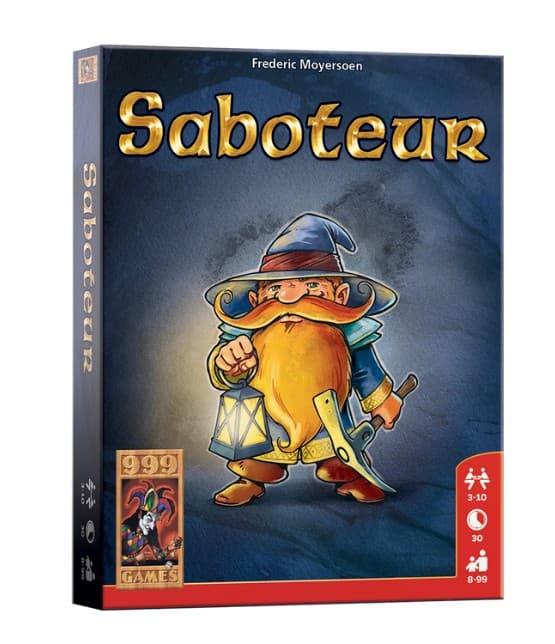
Saboteur - 999 Games Kaartspel
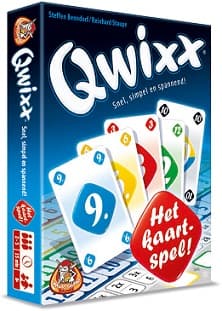
Qwixx het kaartspel - White Goblin Games Kaartspel
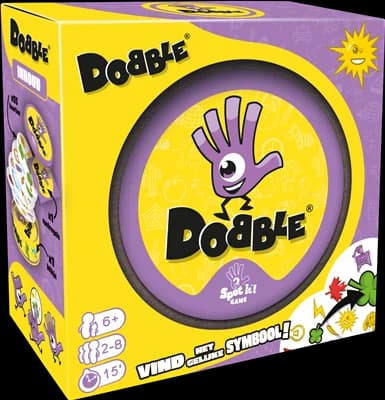
Dobble Classic
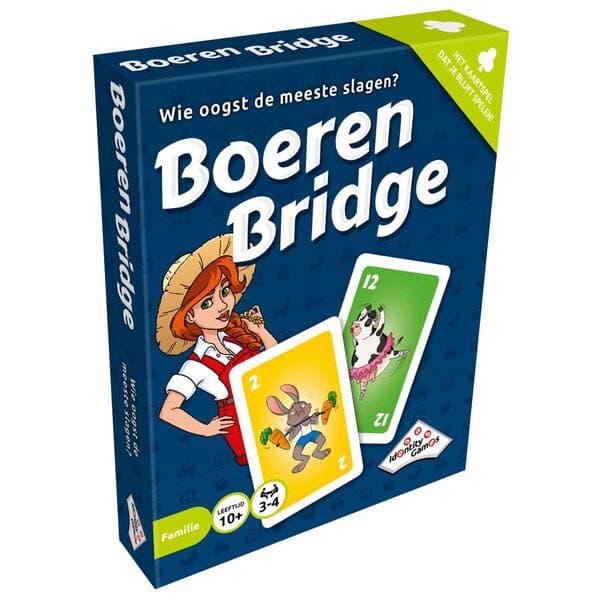
Boerenbridge - Identity Games Kaartspel
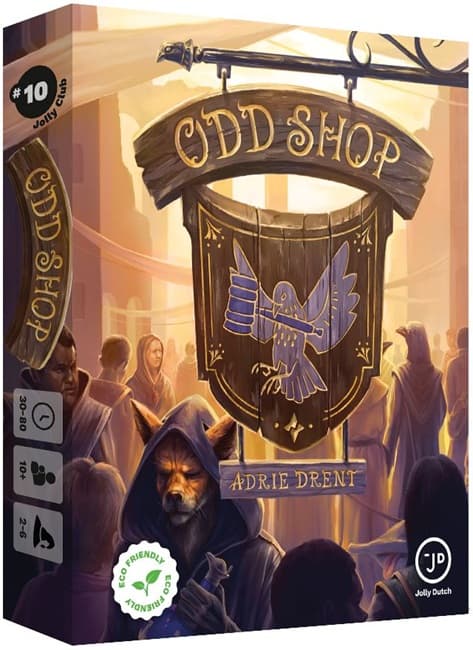
Odd Shop - Jolly Dutch Kaartspel
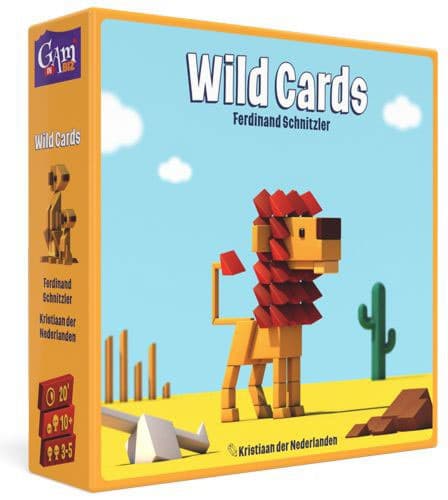
Wild Cards - Kaartspel
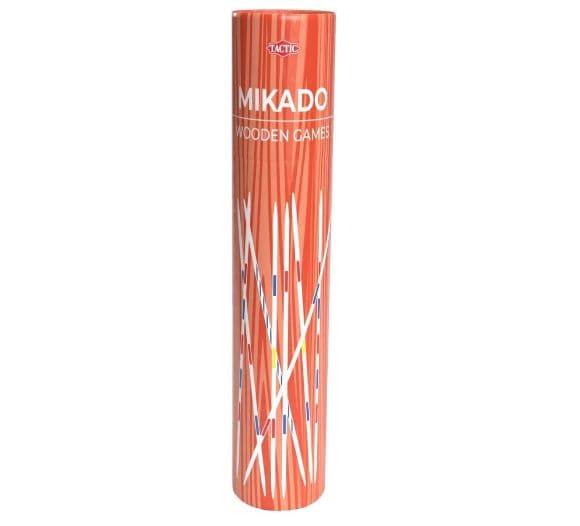
Trendy Mikado - Tactic Behendigheidsspel
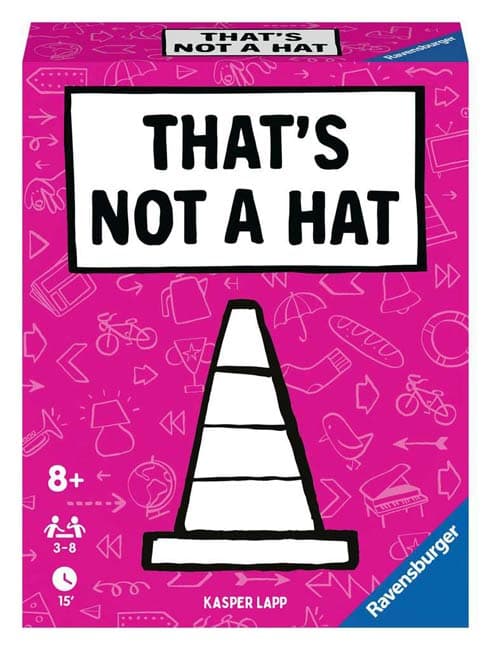
That's not a hat - Ravensburger Kaartspel|Partyspel
Frequently asked questions
How does the Sinterklaas dice game work?
All the presents go, wrapped, on a pile in the middle. Taking turns, you roll a die, and every roll comes with an action: on a 1 you give one away, on a 2 you take one from someone, on 3, 4 and 5 everyone passes a present to the left or right, and on a 6 you take one from the pile — or, if the pile is empty, you unwrap one. As soon as everything is unwrapped on the table, you set a timer nobody can see; when it goes off, the game stops. Agree beforehand how you’ll share out the presents.
How does the left-right story (the swap game) work?
Everyone gets a present in their hands. You read out a story in which the words “left” and “right” come up often; at every “left” everyone passes their present to the left, at every “right” to the right. At the end of the story, everyone keeps the present they’re holding at that moment. You can write a story like that yourself with names from your own family in it — that’s half the fun.
How do you draw names online?
On Kindkado you can draw names online for free. The organiser sets up a draw with a free account and adds the names, with an email address or phone number. Everyone gets their own name by email or through their own link. Nobody draws themselves, and you can rule out pairs who shouldn’t draw each other (partners, for example). Participants don’t need an account and can add their wishlist.
From what age do you draw names?
Usually from about eight, when children realise Sinterklaas doesn’t do everything himself. It works well as a transition: you move from “receiving” to “giving as well”, and for many children that’s the best part. Agree on an amount — five or ten euros — so nobody feels they gave too little.
How do you make a “surprise” that doesn’t go wrong?
Start with a box you already have and build on it — a shoebox, a washing-powder box, a crisps tube. Papier-mâché looks great but takes two days to dry; with cardboard, newspaper and paint you’re done in an evening. Choose something the recipient is known for, or a generally cheerful theme: a stable for the horse lover, a Super Mario for a gamer, or a SpongeBob or Furby.
How do you celebrate Sinterklaas with teenagers who no longer believe?
By letting them join in on the giving side. Drawing names, writing a poem, making a surprise, or running the game on pakjesavond. And keep it short: one evening with a dice game and some treats works better than three weeks of putting out the shoe that they no longer care about.