Lovely drawing supplies for kids — materials & tips for drawing together
Which drawing supplies are fun for children? From drawing sets and art cases to colouring pencils, soft pastels and sketchbooks — plus tips for drawing together.
By Sonja ·
My son (7) is absolutely mad about drawing. It gives him a calm moment and a lot of satisfaction. It’s lovely to see how he keeps finding ways to improve, lets his creative ideas run free and trains his concentration at the same time.
To keep it interesting, we switch between different drawing materials — from all kinds of pencils to chalk and pastels. One moment he draws something freehand, other times we find a photo of wild animals in a book or magazine, copy his favourite Pokémon card, or follow a tutorial on YouTube. And as a parent it’s fun to give your own drawing skills a boost too — of course it’s cosiest when you simply join in now and then.
Why drawing is so good for children
Drawing is much more than a fun way to pass the time. It’s one of the nicest, calmest activities there is — screen-free, affordable and possible anywhere. And without noticing, it gives children a great deal:
- Calm and focus: drawing is a natural ‘quiet moment’ in which children become completely absorbed and train their concentration.
- Self-confidence: seeing yourself get better and better is hugely satisfying — and motivates you to keep going.
- Creativity & self-expression: on paper anything is possible, and children give free rein to their imagination and feelings.
- Learning to look better: to copy something you have to look at it really carefully — the shape, the proportions, the light and the small details you would otherwise miss. That’s how drawing sharpens the eye and teaches children to look more consciously at the world around them.
- Fine motor skills: colouring carefully and drawing lines playfully practises the dexterity that later also helps with handwriting.
How to keep drawing fun and varied
The secret to keeping children enthusiastic is variety — in materials and in what you draw. A few ideas that work well in our house:
- Switch materials: colouring pencils one time, soft pastels or watercolour the next. A new material feels like a little present.
- Draw freehand: just make up whatever ends up on the paper — wonderfully free.
- Copy something: a photo of wild animals from a book or magazine, or a favourite Pokémon card. Copying teaches children an enormous amount about shape and proportion.
- Follow a video: YouTube has endless ‘learn to draw step by step’ videos for children.
- Join in: draw together at the table. It’s cosy, and you give your own drawing skills a boost at the same time.
The best drawing materials at a glance
Below we go through the nicest drawing supplies for children — from the very first wax crayons to watercolour and pastels. For each material you can read briefly what it’s good for and how to use it, each time with a few nice products to get started.
The example products come from lovely Dutch craft and toy shops such as Pipoos, Hobbymax and Invulboekjes.
The product links are affiliate links: if you order through one, you support Kindkado with a small commission — at no extra cost to you. The shops are Dutch online shops that deliver in the Netherlands and Belgium, and the product names are in Dutch.
Complete drawing sets & art cases
Looking for something ready to give? A complete drawing set or a filled art case (sometimes called a drawing box) is packed with materials — ready to get going straight away. There are handy smaller sets and big cases with all sorts inside: colouring pencils, felt-tip pens, crayons, oil pastels and sometimes even watercolour paints and brushes. Ideal as a gift: your child gets everything together at once in a handy box or case.
✏️ How to use it: Think above all about what makes your child happy. Want something they can take in every direction? Choose a big case with a bit of everything (pencils, pens, crayons and sometimes paint). Does your child prefer to draw with one technique? Then a focused set is nicer — for example a beautiful collection of colouring pencils, or a sketching set with graphite pencils and a sketch pad. Either way, pay attention to quality: brands like Bruynzeel (a Dutch classic) or Faber-Castell draw more nicely and last years longer than a very cheap set half of which never gets used.

Bruynzeel kleur- en tekenset - kleine kunstenaars - 60-delig

Bruynzeel Creatives - kleur- en tekenset - 60-delig
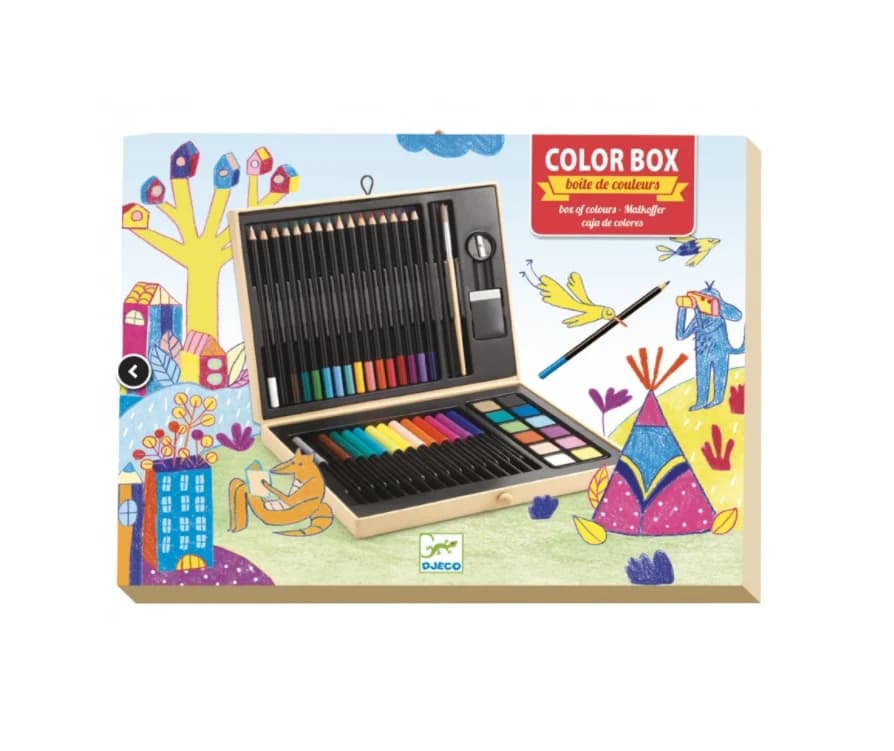
Teken- en Schilderkoffer | 46-delig
For the very youngest
With the youngest children it’s mostly about colouring freely and boldly. Choose materials that are sturdy, don’t break easily and sit well in a small hand: thick, short pencils and chunky wax crayons are ideal. It’s about the fun and the discovering — not the result. And a lovely colouring book can also be a nice encouragement to get stuck in.
About 1½ – 4 years
✏️ How to use it: Give your child a big sheet of paper and let them go for it; big, sweeping movements are just right for their motor skills. Thick, short pencils help them learn a good pencil grip almost by themselves. Tip: put down a wipeable mat or an old oilcloth — it saves you a lot of cleaning up.

Bruynzeel Kids kleurpotloden kort & dik — 20 stuks

Bruynzeel Kids waskrijtjes — 8 stuks

STABILO woody 3 in 1 ARTY — 6 stuks + puntenslijper
Colouring pencils — for older children
As children get older, they want to work more precisely. That’s when slightly thinner colouring pencils are nice: they’re clean, last for years and are ideal for colouring neatly inside the lines as well as for loose sketching. A good set with lots of colours invites them to keep drawing. A fun extra: the Faber-Castell Black Edition has soft, opaque pigment made especially to stand out on black and dark paper too — a cool, surprising effect.
✏️ How to use it: Hold the pencil at more of an angle for soft, wide areas and upright for sharp lines. Let your child colour lightly first and then build up layers — that creates lovely colour transitions. Pressing a bit harder at the end gives deep, rich colours.
Bruynzeel Creatives kleur- & tekenset — 60-delig

Faber-Castell Black Edition kleurpotloden — 12 stuks

Faber-Castell Children of the World — huidtinten, 3 stuks
Graphite or sketching pencils (HB, 2B, 4B…)
If your child really wants to learn to draw and sketch, graphite pencils are essential. The letter on the pencil tells you how hard or soft it is: an H pencil is hard and gives a light, thin line (nice for the first sketch), a B pencil is soft and dark (for shadow and depth). HB sits right in between.
✏️ How to use it: Start lightly with an HB pencil to sketch the shapes. Then work up the shadows and dark areas with a softer 2B or 4B. With a rubber you can bring back the highlights. That way your child learns to play with light and dark.

Bruynzeel Teens — 2 grafietpotloden HB, gum en puntenslijper

Winsor & Newton Studio grafietpotloden — 6 stuks

Panduro Learn & Create kit — schetsen (complete set)
Charcoal — bold and expressive
Charcoal gives a loose, bold effect with deep blacks — wonderful for learning to shade and for making large areas dark quickly. It smudges easily (which is actually fun: shading with your finger or a blending stump), but it also means dirty hands. For the somewhat older, keen artist, a real discovery.
Usually most fun from about age 8
✏️ How to use it: Draw loosely and smudge with your finger or a blending stump to make soft shadows; with a rubber you conjure the highlights back. Do bear in mind that charcoal smudges easily — so store the drawing flat between two sheets of paper, and it stays at its best.

Panduro set schetsen
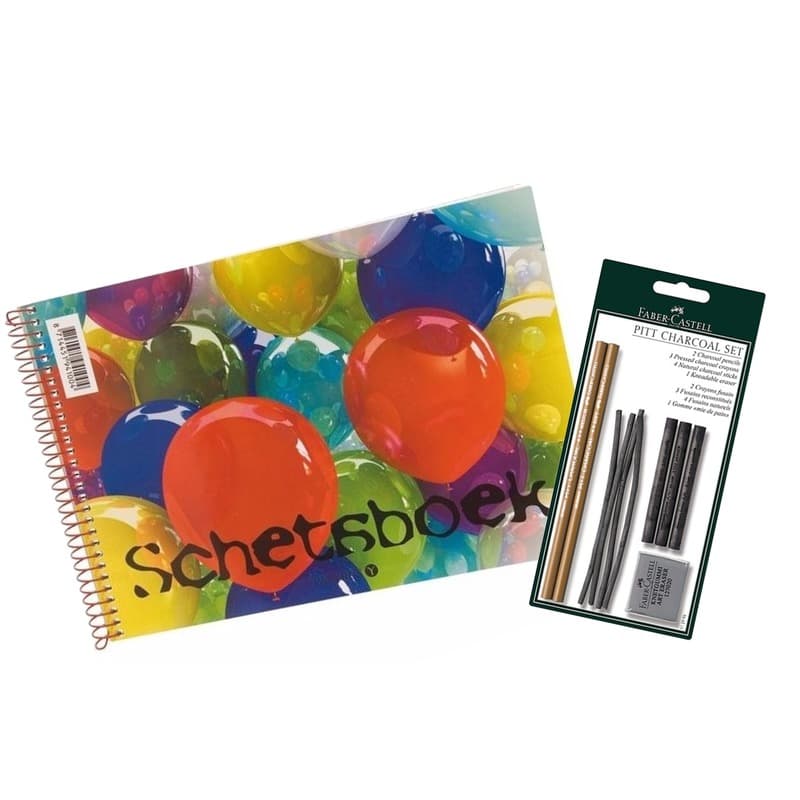
Houtskool tekenset met schetsboek
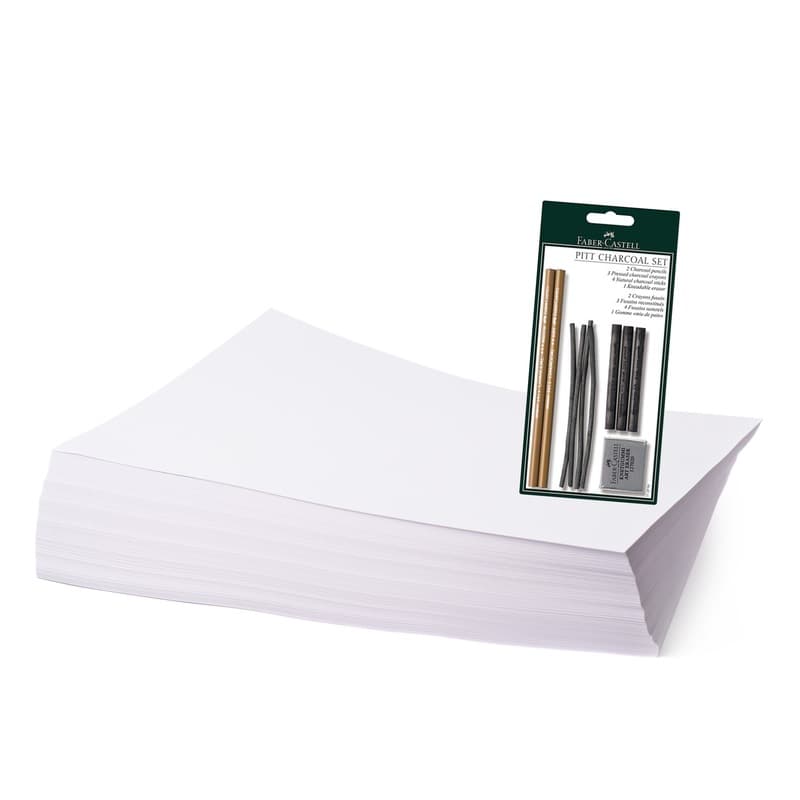
Tekenpakket met houtskool potloden en stiften
Watercolour pencils
Two techniques in one pencil, and always a wow moment for children. First you draw just as you would with a colouring pencil, then you go over it with a wet brush — and the colours dissolve into real watercolour paint. That way you combine the ease of drawing with the feel of painting.
✏️ How to use it: Draw your shapes and colour them in as usual. Wet a small brush lightly and stroke it gently over the colour — from light to dark. Do use slightly thicker (watercolour) paper, or the sheet will crinkle or tear. Let it dry properly before you add a new layer.

Bruynzeel Design aquarelpotloden — 12 stuks

Winsor & Newton Studio aquarelpotloden — 12 stuks

Bruynzeel Rijksmuseum aquarelpotloden — 24 stuks
Oil pastels & soft pastels
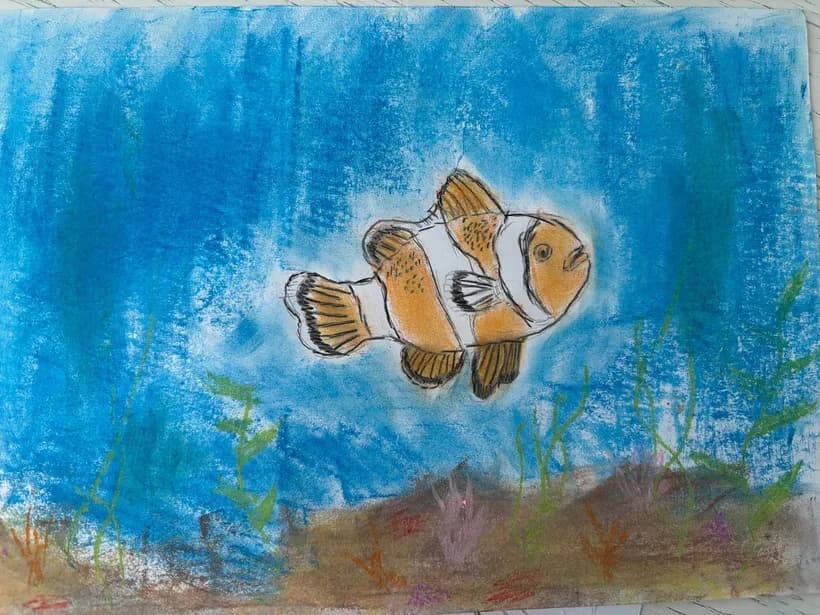
Lovely and creamy, colourful and very rewarding: with pastels you make a cheerful, atmospheric drawing in no time. Oil pastels are a bit greasier and stickier, soft pastels a bit more powdery and softer. Both are ideal for letting colours blend into each other — like the water around the clownfish at the top of this page.
✏️ How to use it: Colour in an area and feel free to add a second colour on top; then rub the colours together with your finger or a blending stump for soft transitions. Work from light to dark and don’t be afraid to press firmly. Note: oil pastel always stays a little greasy (it never really dries) and soft pastel stays a bit powdery and can still rub off — so store the work flat between two sheets of paper and it stays lovely.

Panda oliepastels — 12 stuks

van Gogh oliepastel set — 12 kleuren

van Gogh pastelkrijt set — 12 kleuren
Felt-tip pens & markers
Bright and bold: with felt-tip pens you make striking, cheerful drawings that look ‘finished’ straight away. Ideal for posters, comic characters and anything that’s allowed to be really colourful. Choose sturdy pens that colour smoothly and evenly — and glitter pens or a nice marker set make a drawing extra festive.
✏️ How to use it: Push the caps back on firmly after use, or the pens will dry out. Colour areas in calmly and work from light to dark, so the tips stay clean. Glitter pens look best over an area that’s already coloured in, or on dark paper.

Bruynzeel Kids viltstiften — 12 stuks

Creative Colors glitterstiften — 12 kleuren

Limitless Marker M set — 10 stuks, Main Street

Panduro alcoholmarkers - 48 stuks

Alcoholmarker duo punt 24 stuks
Fineliners & brush pens
For crisp lines, details and ‘inking’ a drawing, fineliners are brilliant. Brush pens have a flexible brush tip: with more or less pressure you get a thin or a thick stroke — fun for colouring and for hand lettering. A favourite with slightly older children.
✏️ How to use it: Sketch lightly in pencil first and then go over the lines with a fineliner; once the ink is dry, rub out the pencil for a crisp result. With a brush pen you practise pressure: press lightly = thin line, press harder = thick stroke.

Bruynzeel Creatives fineliners/brushpens — 12 stuks

edding 1340 brush pen set — metallic, 6 stuks

Ecoline Brush Pen set — 5 stuks, primair
Combining techniques
It’s also great fun to combine different materials — that’s how children discover how they react to each other. A few classics: draw with wax crayon and paint watercolour or Ecoline over it (the wax repels the paint, like magic). Ecoline is a liquid watercolour ink with bright, transparent colours: with a little water you can make lovely, glowing washes and colour transitions with it.
✏️ How to use it: Resist: draw with white or light-coloured wax crayon and then wash watercolour or Ecoline over it; wherever there’s wax, the paper stays clear — as if the drawing appears by magic. Or lay down a layer of Ecoline first and draw over it in pencil once it’s dry. Above all, let your child experiment — here ‘mistakes’ lead to the nicest surprises.

Wasco krijtjes set — 12 stuks

Waterverf — 12 stuks + kwast

Ecoline inkt set — 5 stuks, primaire kleuren
Sketchbooks & paper
Don’t underestimate the paper — it really makes a difference. A sketchbook of their own gives children pride and an overview: all their drawings neatly in one place, like a growing portfolio. For pencil and fineliner, smooth paper works well; if you’re working with water or pastel, choose thicker (watercolour) paper that doesn’t crinkle or tear.
✏️ How to use it: Give your child their own sketchbook to experiment in freely — nothing has to be ‘finished’ or pretty. Write the date on each drawing, and together you’ll see the progress over the months. Loose sheets of thick paper are handy for pieces you want to hang up or give away.
Sketchbooks

Panduro schetsboek — 21x30 cm

HEMA Schetsboek met spiraal — A4

Kangaro dummy schetsboek — A5
Which paper for which material?
One example per type of paper to get started with — the right surface really makes a difference.
Drawing & sketching paper
Good for: graphite & colouring pencils
±120–180 g/m² with a fine texture — a nice all-rounder for detail.
Watercolour paper
Good for: watercolour pencils & watercolour paint
At least 200 g/m², otherwise the paper cockles or warps as soon as water is added.
Pastel paper (with “tooth”)
Good for: charcoal & pastels
The rough texture (“tooth”) lets the dry pigment grip well.
Marker & layout paper
Good for: felt-tip pens, markers, fineliners & brush pens
Smooth paper stops ink bleeding through or feathering — nice for crisp lines.
Mixed-media pad
Good for: dry and wet materials together
±300 g/m², a handy all-rounder if you want to combine techniques.

Panduro blok pastelpapier

Blok alcohol markerpapier — A4

Blok papier voor mixed media — A4

Panduro blok tekenpapier — 30 vellen dik papier, A4

Panduro blok aquarelpapier — A4
Lovely drawing books
Our favourite drawing book is Basisboek dieren tekenen & schilderen (a basic guide to drawing and painting animals) by Julia Woning — I gave it to my son and it keeps him busy for hours: all the techniques (graphite, pastel, watercolour, acrylic) are covered, so you can keep going with it together for a long time. Officially it’s meant for age 12 and up (and adults): ideal for keen little artists who are already a bit further along and want to improve their skills and learn new techniques. Is your child still a budding beginner? Then Ik kan 1000 dingen tekenen (‘I can draw 1000 things’) is spot on! With a thousand simple examples, your child playfully learns to draw the most fun things — from animals and tasty food to vehicles and fantasy creatures. Wonderfully accessible, endless choice and guaranteed hours of drawing fun. Step-by-step drawing books are ideal for children who love learning to draw. In small, clear steps you build up an animal, a face or a kawaii character together — and the result gives a lovely sense of achievement. A nice, structured way to master new shapes and techniques, entirely at your own pace. (These are Dutch editions.) Want an extensive overview by age? See our blog with the best drawing books for kids.
✏️ How to use it: Let your child follow the steps calmly and copy them one at a time; it’s about practising, not perfection. After a few goes, children often dare to vary things themselves and put their own spin on what they’ve learned.
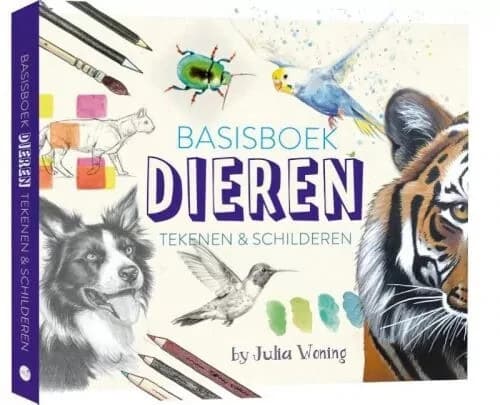
Basisboek dieren tekenen&schilderen
* Amazon-prijs van 12 sep, kan afwijken

Boek — Kawaii leren tekenen

Boek — Tekenen in 10 stappen: De Natuur
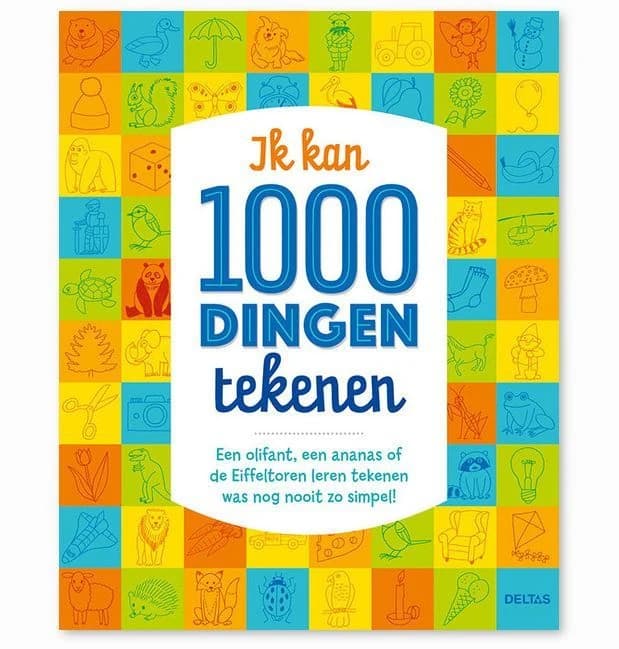
Ik kan 1000 dingen tekenen
* Amazon-prijs van 18 sep, kan afwijken
Themed colouring books
Colouring books are ideal for young children and for children who most love colouring in beautiful pictures. Around a favourite subject — animals, unicorns, kawaii or a much-loved character like Hello Kitty or Pokémon — your child colours away happily inside the lines. Nice for on the go, and a lovely stepping stone to drawing on their own.
✏️ How to use it: Combine a colouring book with good colouring pencils or felt-tip pens for the best result. Let your child choose the big areas first and then the details. And anything goes: a purple elephant or a rainbow sea makes it extra cheerful. For somewhat older children and teens, the ‘cozy’ colouring books (such as Cozy Cuties and Cozy Europe) are hugely popular: cute, calm pictures with lots of room to play with colour transitions and depth yourself — wonderfully relaxing, whether you use colouring pencils or markers.

Kleurboek — Mijn Nieuwste Kleurboek, Unicorn

Kleurboek - Kawaii 'Snacktime'

Kleurboek — Super Color Parade, Hello Kitty and Friends

Paperfuel — Doodle kleurkaarten om te versturen

Kleurboek — CreaChick kleurboek
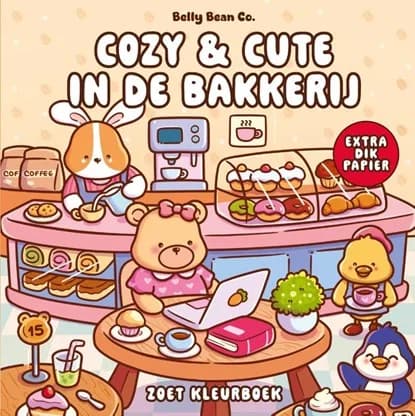
Cozy & cute in de bakkerij: Zoet kleurboek

Kleurboek — Cozy Cuties (Cute & Comfy)
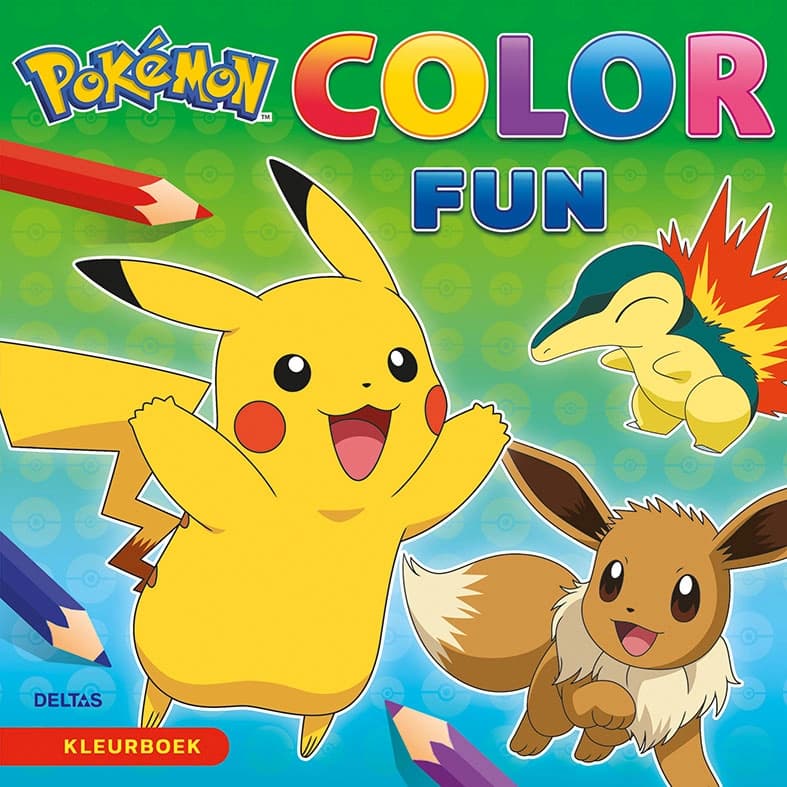
Color Fun - Pokémon - Kleurboek
Drawing stencils
With drawing stencils a lovely drawing always works out — handy for children who are still a bit unsure, or who want to draw lots of figures quickly. You trace the shapes and then colour them in entirely yourself.
✏️ How to use it: Stencil cards and stencil books (for example animals, horses or vehicles) are a nice first step: trace first, then add details and colour yourself. That way your child builds confidence and then dares to draw freehand more often.
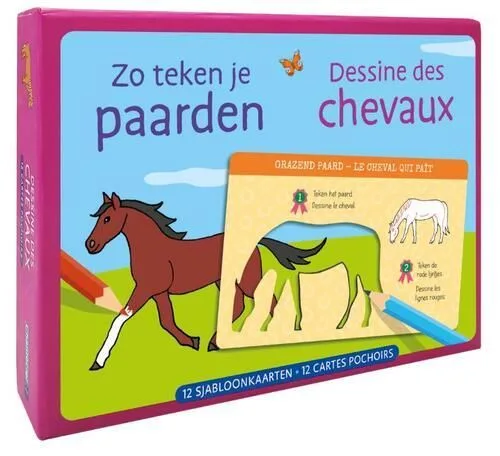
Zo teken je paarden - 12 sjabloonkaarten
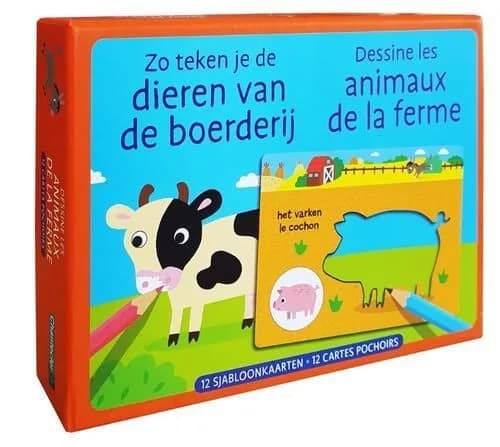
Zo teken je de dieren van de boerderij - 12 sjabloonkaarten
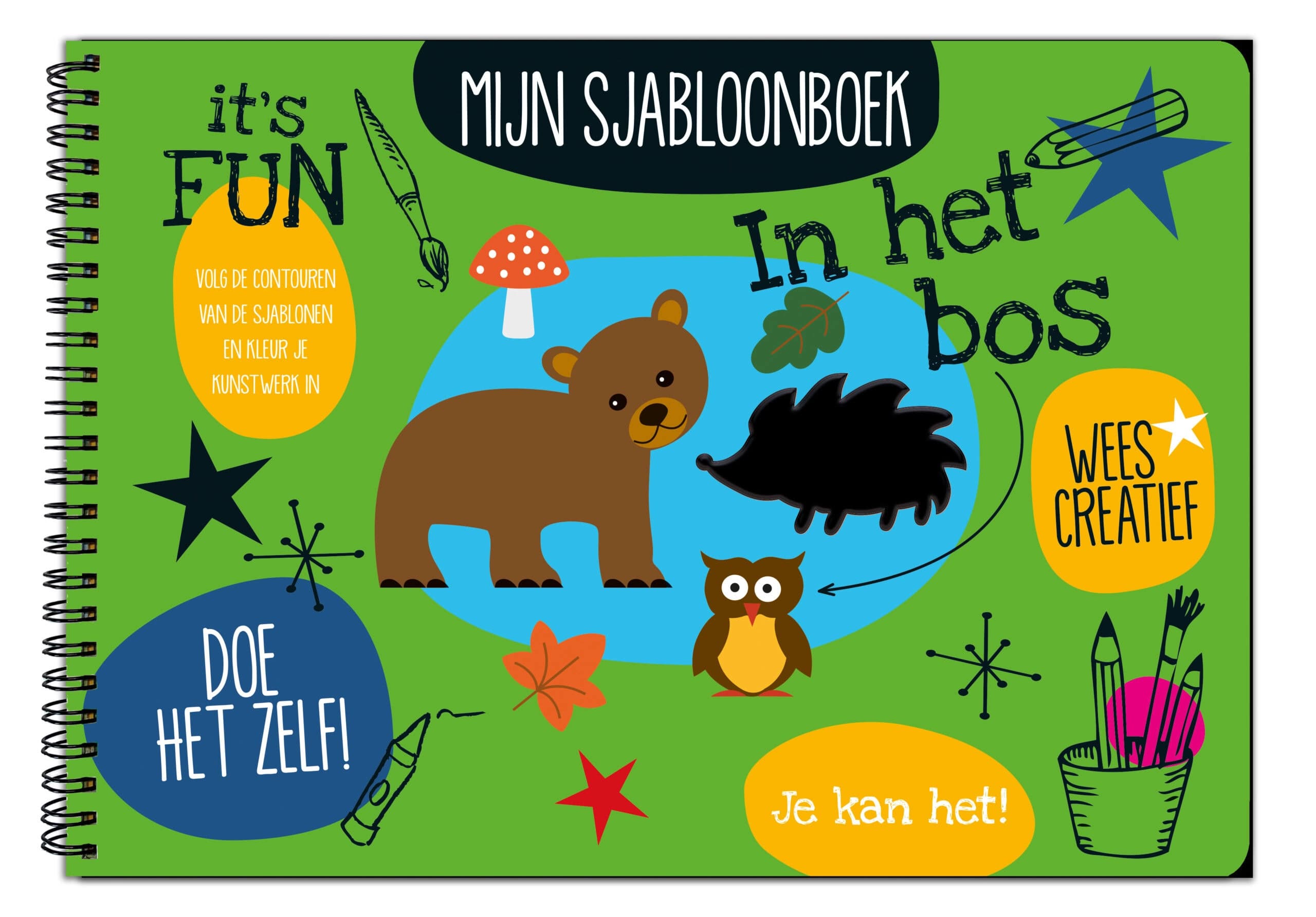
Mijn sjabloonboek - In het bos
Handy extras
The little things that make drawing just that bit nicer. A good rubber, a pencil sharpener and a blending stump really belong in every drawing box.
✏️ How to use it: A putty rubber rubs out gently without damaging the paper, and you can knead it into a point to ‘lift out’ small highlights. A blending stump is a paper stick for smudging pencil, charcoal and pastel into soft shadows.


Even more ideas to think about
Want to take the drawing fun further? These extras are just that little bit different and keep things exciting:
- A light box or tracing table: wonderful for copying and tracing — a great stepping stone to drawing on your own.
- A drawing easel or art folder: drawing upright is good for posture, and a folder keeps the best pieces neatly together.
- A chalkboard or whiteboard: start again endlessly without paper — perfect for quickly trying out an idea.
- A tidy drawing spot with good light: a fixed corner with materials within reach invites children to draw more often.
- Digital drawing: for slightly older children, a drawing tablet or drawing app is a fun, modern addition.
Tip: do something with the best drawings
Nothing motivates a child as much as being proud of their own work. Hang the best drawings up in a frame or on a peg line, turn them into a photo book, or keep them together in a sketchbook or folder. A drawing is also a beautiful, personal gift for grandma, grandpa or a dear friend.
Drawing supplies on a wishlist
Does your child love drawing too? Put the nicest drawing supplies on a free wishlist on Kindkado. That way family know exactly what fits — and your little artist doesn’t get duplicate sets, but that one material they didn’t have yet.
Frequently asked questions
Which drawing supplies does a child need to get started?+
You can get surprisingly far with a basic set: a set of colouring pencils, an HB and a 2B pencil, a rubber, a pencil sharpener and a sketchbook. With those your child can draw and sketch endlessly. Only then expand with, for example, pastels, watercolour pencils or brush pens — variety is exactly what keeps it fun.
From what age can a child draw?+
From about a year and a half, children love scribbling with chunky wax crayons. Around 3–4 the first recognisable shapes appear, and from about 6–7 many children want to ‘really’ learn to draw — that’s when pencils, pastels and watercolour are extra fun. Above all, let your child set the pace.
What is the difference between an HB and a 2B pencil?+
The letter and number show the hardness. H stands for hard: a light, thin line that’s nice for the first sketch. B stands for soft (from ‘black’): a dark line for shadow and depth. HB sits right in between. The higher the number with the B (2B, 4B, 6B), the softer and darker the pencil.
Which paper do you use with which drawing material?+
It really makes a difference to the result. Graphite and colouring pencils work fine on ordinary drawing or sketching paper; charcoal and pastels need paper with a rough texture (‘tooth’) so the pigment grips; watercolour pencils and watercolour paint need sturdy watercolour paper (at least 200 g/m², or it cockles); and felt-tip pens, markers and fineliners look best on smooth marker or layout paper. Want to be able to combine everything? Then choose a mixed-media pad. Further up this page you’ll find our overview ‘Which paper for which material?’ with an example for each type of paper.
Are expensive drawing supplies worth it for children?+
For children, usually not. Good mid-range brands such as Bruynzeel, Faber-Castell or STABILO are pleasant to draw with, last for years and aren’t expensive at all. More important than the price is that the material works nicely and invites them to get started. Rather invest in a few good basic materials than in one huge set.
How do I keep drawing fun for my child?+
Vary the materials and give little assignments: copy something from nature, draw a favourite Pokémon, or follow a step-by-step video on YouTube. Above all, draw together now and then — that’s the cosiest of all. And hang up the nicest pieces or keep them in a sketchbook; that pride is contagious.
What is a good drawing set or art case for a child?+
A good drawing set has varied contents: colouring pencils, felt-tip pens and some crayons, plus a rubber and a pencil sharpener. A filled art case (or drawing box) is extra fun as a gift because everything is neatly together in a handy case. Choose a reliable brand such as Bruynzeel — it’s pleasant to draw with and lasts for years. For most children a medium-sized set is nicer than an enormous case half of which never gets used.
Which drawing supplies make a nice gift?+
A nicely filled set (colouring pencils plus a sketchbook), a pastel or watercolour set, or a set of brush pens almost always goes down well. Not sure what a child already has? Put drawing supplies on a wishlist — then you get exactly what fits and avoid duplicate presents.
More gift inspiration?
Would your child like to learn to draw? See the best drawing books for kids. Looking for a creative gift for a particular age? See our gift ideas for ages 5–6, ages 7–8 and ages 9–10 — packed with craft and drawing supplies. Or dive into budget-friendly gifts and giving sustainably. Does your child love crafts? Then make a hobby horse together.